
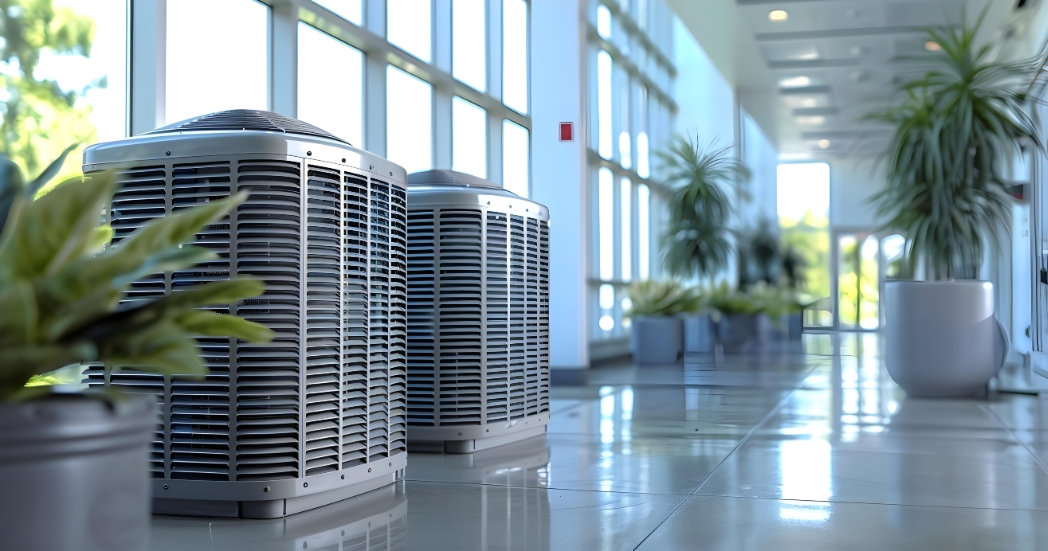
A building’s HVAC system does more than heat and cool. It quietly shapes how the air feels, smells, and circulates throughout offices, retail spaces, and common areas. In busy commercial buildings, where people are coming and going all day, the way HVAC is designed and maintained can play a major role in overall indoor air quality (IAQ).
In this blog, we’ll explore the impact your HVAC system has on your commercial property.
Ventilation and Fresh Air
- Outside air intake: HVAC equipment brings in a controlled amount of outdoor air to dilute indoor pollutants like CO₂, odors, and VOCs from cleaning products and furnishings.
- In crowded spaces, insufficient ventilation can lead to “stuffy” rooms, headaches, and lower concentration, even when the temperature looks fine on the thermostat.
- Properly set and maintained outside air dampers help keep fresh air levels consistent during business hours.
Filtration and Dust Control
- Return air passes through filters that capture dust, pollen, and other airborne particles before air is recirculated.
- In busy buildings, higher‑efficiency filters (appropriate for the system) can reduce dust on surfaces, improve perceived cleanliness, and help sensitive occupants breathe easier.
- Neglected or clogged filters restrict airflow, strain equipment, and let particles bypass filtration, which can make IAQ worse over time.
Humidity, Comfort, and Microbial Growth
- In climates with high humidity, HVAC plays a key role in keeping indoor moisture in a comfortable range.
- When humidity runs too high, occupants may feel sticky or warm, and the space can become more hospitable to mold and mildew.
- When it’s too low, the air can feel dry and irritating. Balanced humidity helps both comfort and the building’s finishes and furnishings.
Airflow Patterns and “Dead Spots”
- Supply and return locations determine how air moves through offices, hallways, and shared spaces.
- Poorly balanced systems can create areas that feel stagnant, where odors linger, and air feels “heavy,” while other areas get strong airflow.
- Simple adjustments — like balancing dampers or redistributing diffusers — can help air mix more evenly and reduce hot/cold and fresh/stale zones.
Maintenance Makes a Noticeable Difference
- Routine maintenance (filter changes, coil cleaning, drain checks, and inspections) supports both system performance and IAQ.
- Dirty coils and drain pans can harbor microbial growth, which may contribute to odors and reduced air quality when air passes over them.
- Proactive checks keep these issues from becoming noticeable to tenants and visitors.
How a Reliable Charleston HVAC Partner Can Help
For property managers and building owners, working with a commercial HVAC company in Charleston that understands IAQ is critical. A good partner can:
- Review ventilation and filtration levels for busy areas.
- Recommend filter types and change intervals that match occupancy and use.
- Address airflow balance issues that create comfort complaints.
- Build maintenance plans that support both system reliability and indoor air quality.